English
 Polski
 Español
 українська

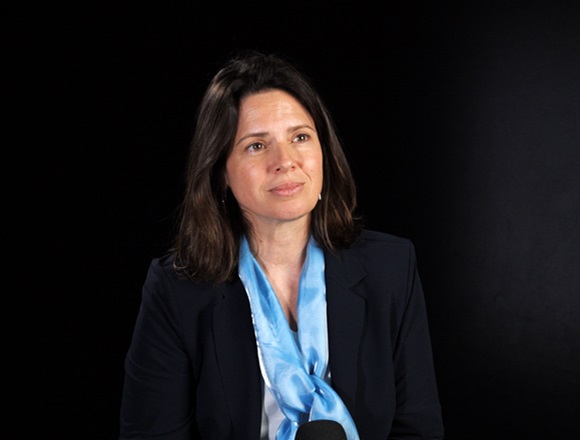
Virginia Hernández-Gea, MD, PhD, is a hepatologist and researcher at the Hospital Clínic de Barcelona, Spain. Her main research interests are portal hypertension and vascular diseases. She contributed to guidelines on esophageal varices from the American Association for the Study of Liver Diseases.
Should additional treatments (such as vitamin K or other agents) be initiated in patients with advanced liver disease and elevated international normalized ratio (INR) and/or thrombocytopenia to prevent bleeding complications?
Virginia Hernández-Gea, MD, PhD: Patients with cirrhosis usually do have low platelet levels and a high INR, and this reflects liver disease. However, they do not predict the bleeding risk, and this is why we don’t recommend correcting these parameters in order to prevent bleeding risk.
In a patient with cirrhosis—with stable cirrhosis—not admitted to the hospital, it’s very infrequent that they do have deficiency in vitamin K, and usually we do not recommend it. The situation is different when the patients with cirrhosis come to the hospital with an acute disease, sometimes infection, sometimes they have malnutrition, sometimes they have cholestasis. Here, we can give them vitamin K to improve the INR a little bit. However, if we give one dose and we see no changes, there is no recommendation to give another vitamin K dose after that.
Regarding platelets, there is no threshold agreed among experts and among societies to correct thrombocytopenia and most of the experts, I would say, do not recommend, or they do recommend against transfusing platelets in patients with a platelet count >30×109/L. But still, this is a matter of controversy. The general rule—or it is more like an agreement—is that if platelets are ≥50×109/L, do not transfuse.