Lessons from the COVID-19 pandemic

2023-04-13
Dominik Mertz

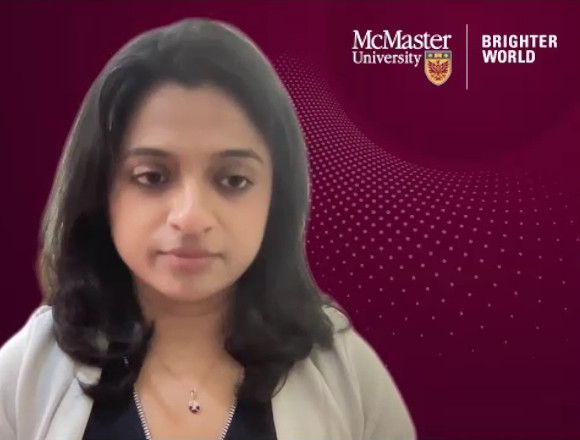
Dominik Mertz, MD, MSc, is an associate professor of medicine and director of the Division of Infectious Diseases at McMaster University.

What should the COVID-19 pandemic teach us in terms of the risk of future international-scale epidemics? What lessons on public health should we learn from the course of this pandemic?

I think there will be many lessons to be learned. My main concern is that by the time we hit the next pandemic, those lessons will be forgotten again.

The main [thing] in my mind is we shouldn’t panic. Whenever we panic, we make wrong decisions. We all overreact or underreact at times and if that can be prevented, that would be great. But I think that’s where our human nature kicks in, right?

[It’s about] not forgetting the learnings from COVID-19. What worked, what didn’t work, how to communicate with the public. I think those things hopefully will not be forgotten and can be reused in future pandemics.
See also
  • COVID-19 resource hub Resources helpful in addressing the coronavirus disease 2019 (COVID-19) epidemic.
  • Infectious diseases with a pandemic potential What are the most important emerging and re-emerging infectious diseases in terms of the risks of international spread and pandemic potential?
  • Zika virus disease and pregnancy Could you comment on the current epidemiology of Zika virus disease? Is Zika virus still a significant threat for pregnant women?
  • Long COVID: A review of current knowledge and perspectives Dr Manali Mukherjee discusses the emerging findings on long COVID in the context of other postviral syndromes.
  • Emerging infectious threats for travelers A lecture by Dr David Brett-Major, from the Uniformed Services University, USA, delivered at McMaster International Review Course in Internal Medicine (MIRCIM) in May 2019.
  • Long COVID and pain What type of pain is most prevalent in long COVID and how to manage it?
  • N95 respirators versus medical masks in viral infections transmitted by inhalation Is it already known which are better in providing medical care to those infected with SARS-CoV-2: medical masks or N95 respirators? Should we recommend the use of N95 respirators by immunosuppressed patients in the setting of increased exposure to pathogens transmitted by inhalation, including SARS-CoV-2?
  • Mechanisms of long COVID Following severe acute respiratory syndrome coronavirus 2 (SARS-CoV-2) infection, many people develop long COVID with various clinical manifestations. What is known about the etiology and pathogenesis of long COVID? Is the mechanism similar, to, for example, chronic fatigue syndrome after other infections? Is it possible to shorten the duration of long COVID symptoms?
  • Epidemiologic changes in the post-COVID-19 era During the COVID-19 pandemic, many countries experienced difficulties in implementing vaccination programs and other infectious disease control measures. This affected the epidemiology of some diseases, with increase in the global number of malaria cases being an example. How significant are these epidemiologic changes for clinical practice?
  • Clinical presentation of SARS-CoV-2 infection in South Asia Does the clinical presentation of SARS-CoV-2 infection in South Asian populations differ from other countries?

We would love to hear from you

Comments, mistakes, suggestions?