English
 Polski
 Español
 українська

In your opinion, what is going to be the future of point-of-care ultrasound?
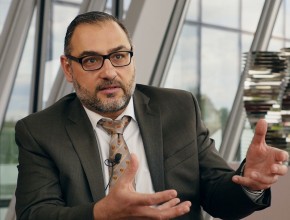
Khalid Azzam: Every internist, every physician will not carry a stethoscope anymore – they will carry a handheld ultrasound. That is a joke. The future is, they will have to carry their ultrasound and their stethoscope. Point-of-care ultrasound is another piece of equipment. Stethoscope has been there for decades and decades, going back 2 centuries ago; the principle has not changed a lot, although we have developed from the acoustic to the electronic.
Point-of-care ultrasound is a new addition to our physical examination skills. This is nothing other than a new tool that we need to introduce to help our patients. We have shown in the literature that it does help you make quicker decisions, provide safer care, reduce complications; it may even help you in preventing readmissions of patients. There is no reason we should not start working towards ensuring it becomes a tool every physician has. We have surveyed our internists and residents at McMaster University looking at needs assessment for point-of-care ultrasound and invariably almost everyone has stated that in the next 10 years that will be just a standard of care. We all see this is going to be a standard of care in the future.